
DIY Wall Repair Mistakes That Make Paint Touch-Ups Obvious
A practical guide to the drywall repair errors that make patches flash, hump, crack, or stand out under normal room light.
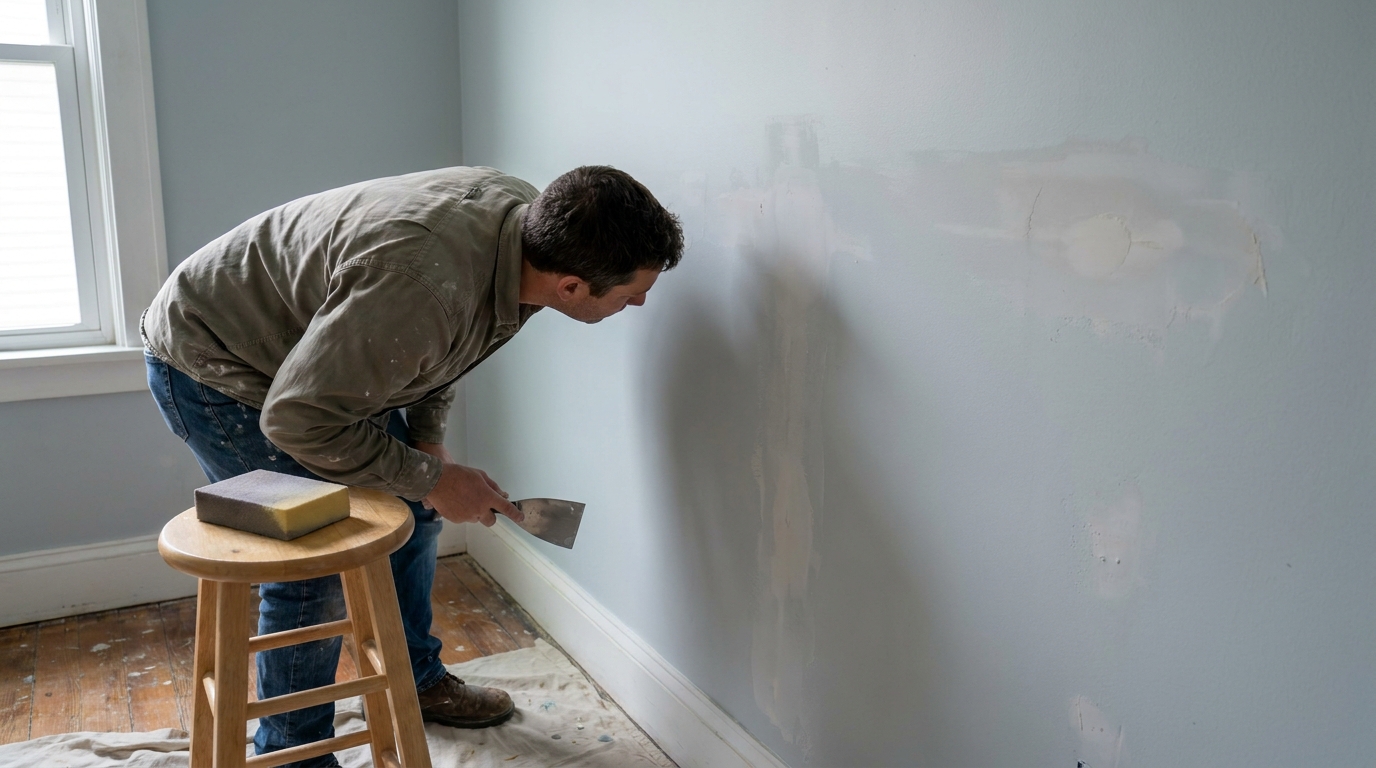
Why patched walls still show after paint
Most obvious wall repairs are not paint problems. They are prep and finishing problems that paint simply reveals. A patch can feel smooth to your hand and still stand out badly once light hits it from the side.
The good news is that most ugly touch-ups trace back to a handful of repeat mistakes.
1. Choosing the wrong repair method for the hole size
Trying to use spackle on a hole that really needs a patch is one of the fastest ways to get a weak repair that sinks or cracks. Tiny holes, small holes, and medium cut-outs are not the same job.
If the opening is beyond a basic cosmetic fill, step up to a mesh patch or a proper drywall insert.
2. Leaving torn paper or loose material under the repair
Joint compound sticks best to sound drywall. If the paper face is torn up, bubbling, or dusty, the repair may never feather cleanly. It can also blister once wet compound hits it.
Cut away loose paper, stabilize the surface, and start from something solid.
3. Applying compound too thick
Thick mud feels faster in the moment, but it often shrinks, cracks, or creates a hump that takes more sanding than homeowners expect. Thin coats take more patience, but they usually look much better.
A good rule is simple: build the repair wider, not thicker.
4. Not feathering the patch far enough
Many DIY repairs fail visually because the repair area stops too abruptly. Even if the center of the patch is filled, the edge transition can still telegraph through paint.
The fix is to feather the finish wider than you think you need, especially on flat walls that catch daylight.
5. Sanding too little or too aggressively
Too little sanding leaves ridges. Too much sanding can cut into the tape, expose the patch, or rough up the wall face around the repair. The goal is controlled sanding, not brute-force sanding.
Check the repair with a side light instead of relying only on your hand.
6. Skipping primer before touch-up paint
This is one of the biggest offenders. Patched drywall and joint compound absorb paint differently than the surrounding wall. Without primer, the patch may flash dull, shiny, or just visibly different.
If you want the touch-up to disappear better, prime first.
7. Expecting a tiny paint touch-up to blend on an older wall
Even a perfect patch can still show if the surrounding paint has faded, aged, or changed sheen over time. Sometimes the patch is fine. The wall color match is the real problem.
In that case, repainting the full wall often looks cleaner than dabbing paint only on the repair.
8. Ignoring the cause of the damage
If a wall keeps cracking, staining, or softening, the patch is not the full repair. Moisture, movement, or repeated impact may be the real issue.
That is why repeated touch-ups often fail in the exact same spot.
How to make wall touch-ups blend better
- match the repair method to the hole size
- remove loose material first
- build thin coats and feather them wide
- sand with a side light, not just by feel
- prime before paint
- be realistic about repainting the whole wall when color or sheen mismatch is obvious
Related pages to help you fix it right
- How to Patch Drywall Holes the Right Way
- Drywall Repair Cost Estimator
- Best Drywall Patch Kits for Small and Medium Wall Repairs
- Joint Compound vs Spackle vs Patch Kits: What to Use and When
- Signs a Small Water Leak Is Turning Into Wall Damage
Frequently asked questions
Why does my drywall patch show after painting?
Usually because the patch was not feathered wide enough, sanded smooth enough, primed properly, or painted in a way that matches the surrounding wall.
Should I prime a drywall patch before touch-up paint?
Yes. Primer helps the repaired area absorb paint more evenly and makes flashing much less likely.
Why does my paint touch-up look shinier or duller than the wall?
The repaired surface may be absorbing paint differently, or the surrounding paint may have aged and changed sheen over time.
Do I need to repaint the whole wall after a patch?
Not always, but full-wall repainting often looks better when the wall color has faded or the repaired area is in strong light.
What is the most common drywall repair mistake?
Using the wrong repair method for the hole size is one of the most common and most visible mistakes.