
How to Diagnose and Fix Low Water Pressure in Your Home
Learn how to pinpoint whether low water pressure affects one fixture or your whole house, clean or replace clogged parts, adjust your pressure regulator, and know when to call a plumber.
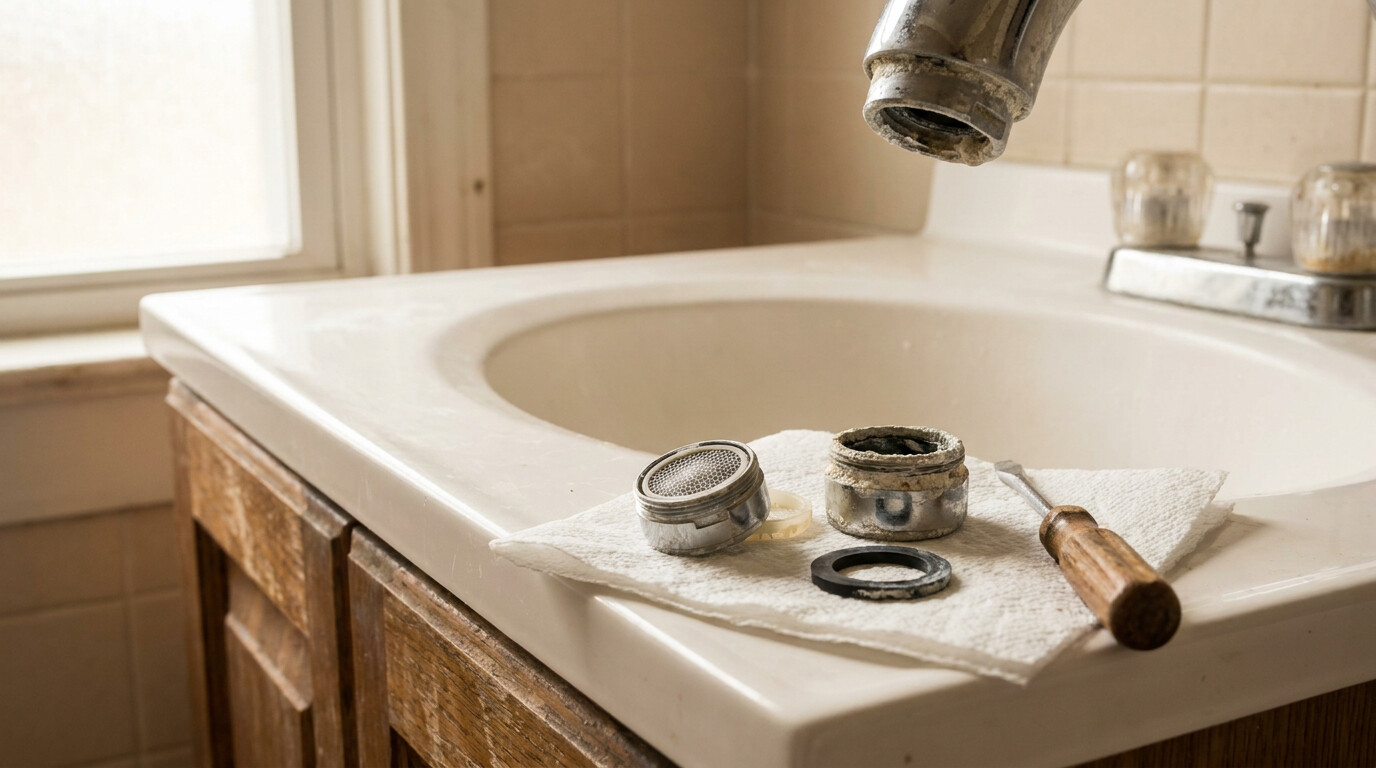
Nothing kills a good shower faster than a trickle. Low water pressure is frustrating, but before you call a plumber, there are several things you can check and fix yourself. The key is diagnosing where the problem lives.
This guide walks you through the diagnostic process step by step — from the simplest fixes to those that need a pro — so you don’t waste time or money.
Step 1: Isolate the Problem
The very first question: Does the low pressure affect one fixture or the whole house?
Turn on every cold-water faucet in the house simultaneously — kitchen, bathroom sinks, tub, shower, and any outdoor spigots.
- If only one fixture has low pressure: The problem is local to that fixture. This is usually the easiest (and cheapest) fix.
- If multiple fixtures on the same floor are weak: The issue may be in that branch of your plumbing.
- If every fixture in the house is weak: The problem is upstream — your main supply line, pressure regulator, or the municipal supply.
Step 2: Fix a Single Fixture
If only one sink, tub, or shower has low pressure, start at the fixture itself. This is the most common scenario and usually takes under 10 minutes.
Clogged Aerator (Sink Faucets)
The aerator — the small screen at the tip of your faucet — traps sediment and mineral deposits. Over time it can clog completely.
- Unscrew the aerator from the faucet tip. Use pliers wrapped in tape if it’s stuck.
- Disassemble the aerator and rinse each layer under running water.
- Scrub the screen gently with an old toothbrush.
- Soak in white vinegar for 30 minutes if you see hard-water deposits.
- Reassemble and reinstall. Test the pressure.
Clogged Showerhead
Mineral deposits can plug showerhead nozzles the same way.
- Unscrew the showerhead from the shower arm.
- Soak it in a plastic bag filled with white vinegar for 1–2 hours (overnight for heavy buildup).
- Scrub the nozzles with a toothbrush.
- Rinse thoroughly and reinstall.
Partially Closed Shut-Off Valve
Look under the sink or behind the toilet. Each fixture has a small shut-off valve on the supply line. Make sure it’s turned fully counterclockwise (open). Valves left partially open after a remodel or repair are a surprisingly common cause of low pressure.
Step 3: Check for Whole-House Issues
If multiple fixtures are weak, the problem is system-wide.
Check Your Pressure Regulator
Most homes have a pressure-reducing valve (PRV) — a bell-shaped device on the main water line, usually near where it enters the house near the water meter. It looks like a brass dome with a bolt on top.
Over time, PRVs can fail or drift out of adjustment, reducing pressure throughout the house.
To check it:
- Buy a water pressure gauge ($10–15 at any hardware store).
- Attach it to an outdoor hose bib or washing machine faucet.
- Turn the water on fully. Normal residential pressure is 40–60 PSI.
- If the reading is below 40 PSI, the PRV may need adjustment or replacement.
Adjusting a PRV: Tighten the adjusting bolt on top clockwise to increase pressure — but only in quarter-turn increments. Over-adjusting can damage pipes and appliances. If you’re not comfortable doing this, call a plumber.
Partially Closed Main Shut-Off Valve
Check the main water shut-off valve — usually near the water meter in the basement or crawlspace — and confirm it’s fully open. If someone recently worked on the plumbing and didn’t fully reopen the main valve, that alone can cause weak pressure everywhere.
Municipal Supply Issues
Ask your neighbors if they’re experiencing the same problem. If they are, the issue is with the city water supply or a nearby main break. In that case, call your water utility — there’s nothing you can do on your end.
Step 4: Check for Hidden Problems
If none of the above fixes work, the problem may be deeper in your plumbing.
Corroded Galvanized Pipes
If your home was built before the 1960s, you may have galvanized steel pipes that have corroded internally over decades. Mineral buildup can narrow the pipe interior to a fraction of its original diameter. This is a major renovation — replacing galvanized pipes with copper or PEX — but it’s the only permanent fix.
Water Heater Sediment (Hot Side Only)
If only the hot water is weak, sediment in the bottom of your water heater tank may be restricting flow. Flushing the water heater (see our water heater flush guide) often restores hot water pressure.
Pressure Loss Between Floors
If upstairs fixtures are noticeably weaker than downstairs ones, it might be normal pressure loss due to elevation plus fixture demand. But if it’s sudden or extreme, you could have a partial blockage or leak in the supply riser.
When to Call a Pro
Some low-pressure causes need professional help:
- PRV replacement: If adjusting the regulator doesn’t work, replacement requires soldering or compression fittings.
- Main line issues: If your main supply line between the meter and house is damaged or restricted, a plumber (or sometimes the water utility) handles this.
- Repiping: Corroded galvanized or clogged pipes need a full repipe — this is a licensed plumber’s job.
- Sudden, severe pressure drop: Could indicate a hidden leak. If you also hear running water when everything is off or see wet patches in the yard, call a plumber immediately.
Prevention Tips
- Test your pressure annually with a hose-bib gauge. Catch problems before they become emergencies.
- Flush your water heater yearly to prevent sediment from reaching fixtures.
- Clean aerators and showerheads every 6–12 months — it’s free and takes minutes.
- Know where your shut-off valves are — fixture, main, and water heater — and exercise them once a year to prevent them from seizing.
Quick-Reference Checklist
| Symptom | Likely Cause | DIY Fix |
|---|---|---|
| One sink only | Clogged aerator | Clean or replace aerator |
| Shower only | Clogged showerhead | Soak in vinegar |
| Hot water only weak | Water heater sediment | Flush water heater |
| All fixtures weak | Pressure regulator or main valve | Check PSI, adjust PRV |
| Upstairs only weak | Elevation + demand or partial blockage | Check for leaks |
| Neighbors have same issue | Municipal supply | Call water utility |