
How to Fix a Stuck Window That Won't Open — Free Painted-Shut, Swollen, or Jammed Sashes
Learn how to safely free a stuck window that won't open — from cutting paint seals and tapping swollen sashes to replacing broken sash cords — with basic hand tools.
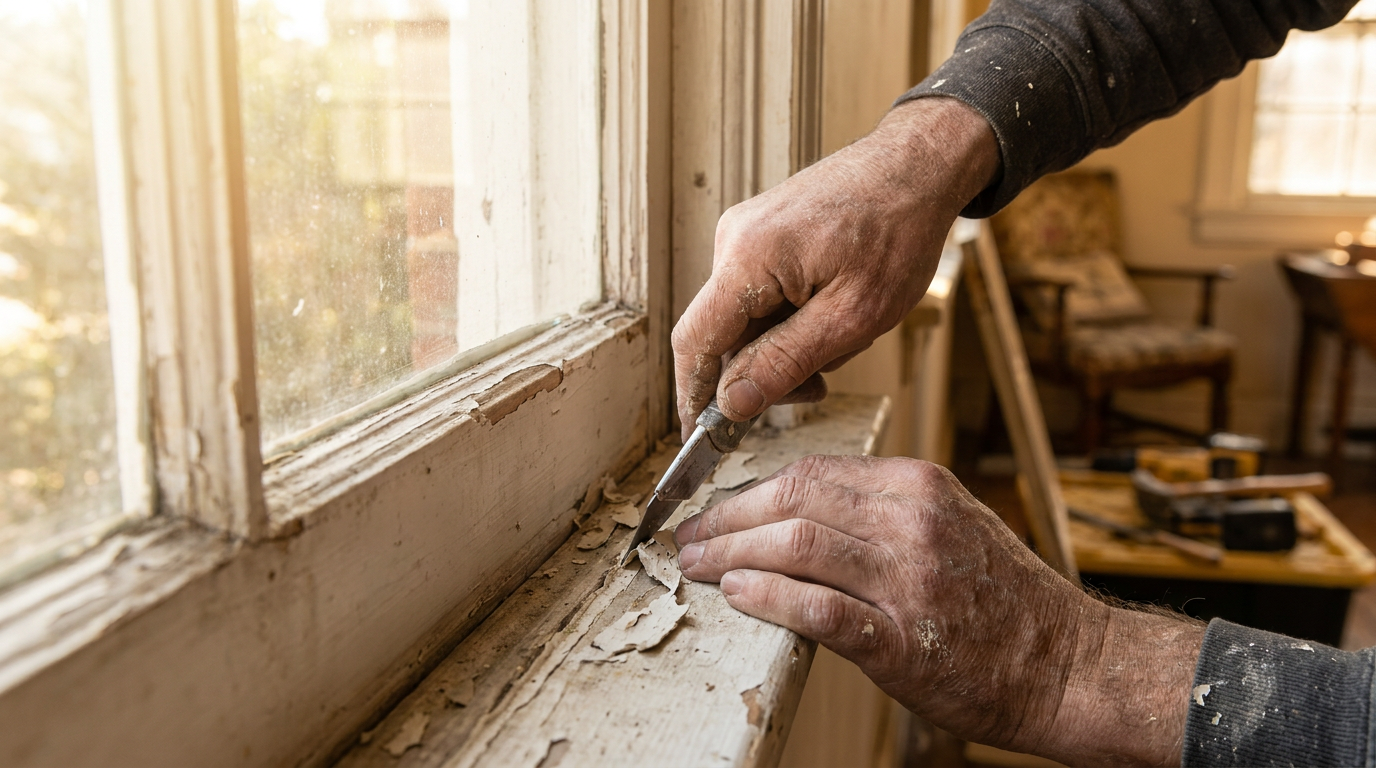
There are few things more frustrating on a warm spring morning than walking up to a window, turning the lock, and getting nothing — no movement, no give, just a stubborn sash that refuses to budge. Fortunately, nine out of ten stuck windows can be freed safely with basic hand tools and a little patience, no replacement required.
A window that won’t open isn’t just an inconvenience — it’s a fire hazard. Every habitable room needs at least one operable window for emergency egress. So fixing a stuck window is both a comfort upgrade and a safety fix.
The right approach depends entirely on why the window is stuck. Let’s diagnose the cause first.
Step 1: Diagnose Why the Window Is Stuck
Take a close look at the window before reaching for any tools. There are three common culprits:
Painted shut. Look at the seam between the sash and the stop moulding or window frame. If you see a continuous layer of paint bridging the gap — especially along the top edge of a double-hung window’s upper sash or along the sides of a casement window — that is probably your problem. The paint has effectively glued the window closed.
Swollen from moisture. Wood sashes absorb humidity over time. If the window is hard to open on humid days but works fine in dry weather, the wood has swelled. Look for a tight fit all around, especially on the sides, where the sash rubs against the jamb.
Broken or jammed hardware. Crank out casement windows that don’t move usually have a stripped gear or a stuck pivot shoe. Double-hung windows that are dead in the water may have a broken sash cord or a popped-out balance spring. If the window has been painted repeatedly, sometimes layers of paint on the hardware itself jam the mechanism.
Step 2: How to Free a Window That’s Painted Shut
This is the most common cause of stuck windows in older homes, and it is also the easiest to fix.
What you’ll need
- Utility knife with a fresh, sharp blade
- Putty knife or painter’s 5-in-1 tool
- Hammer (for gentle tapping)
- Wood shims or a pry bar
- Safety glasses
Cut the paint seal
Insert a sharp utility knife into the seam where the window sash meets the frame. Slide it along the entire perimeter of the sash, cutting through the paint film. Do this on both sides of the window — interior and exterior — cutting carefully so you don’t dig into the wood.
Pay special attention to the stop moulding (the thin strip of wood that holds the lower sash in place) and the parting bead (the vertical strip between the upper and lower sashes on a double-hung window). These are common spots where paint bridges the gap.
Tap the sash loose
Place a block of scrap wood against the bottom edge of the sash (the window sill side) and tap it gently with a hammer. Start at one corner and work across. The vibration and gentle inward force will often break the paint bond cleanly.
For the upper sash of a double-hung window, access it from the outside if possible, or reach up from inside with a putty knife against the top rail.
Pry carefully if tapping doesn’t work
Slide a stiff putty knife into the gap between the sash and the stop, then gently twist the blade to create separation. Work your way around the window, prying a little at each spot. Never force — you can split the wood or break the glass.
Step 3: How to Free a Swollen Wood Window
If the window is not painted shut but simply fits too tightly, the wood has absorbed moisture and expanded. Here is how to handle it:
Wait for dry weather. If you can wait a few days for the wood to dry out naturally, the window may free itself. Running a dehumidifier in the room helps speed this up.
Lubricate the channels. Spray a dry silicone lubricant (not oil or WD-40) into the side channels and along the bottom edge of the sash. Silicone won’t attract dust and grime like grease-based lubricants. Work the window gently back and forth.
Sand the tight spots. If lubrication is not enough, identify where the sash is rubbing — look for shiny, worn spots on the paint or bare wood. Fold a piece of 80- or 100-grit sandpaper around a sanding block and lightly sand only the contact points. Sand the sash, not the frame — the sash is easier to replace if you overdo it. Wipe away the dust and test the fit after every few passes.
Step 4: How to Free a Window with Broken Hardware
If cutting the paint and sanding don’t help, the issue is likely mechanical.
Double-hung windows with broken sash cords or balances
Old double-hung windows use sash cords and weights hidden in the side jambs. When a cord breaks, the sash tilts or binds. Newer double-hungs use spring-loaded balances.
- Broken sash cord: If the upper sash falls when lifted, or the lower sash won’t stay up, a cord has snapped. This requires removing the stop moulding and accessing the weight pocket — a moderate DIY project best done with two people.
- Broken spiral balance: If the sash is hard to move in one direction but easy in the other, the balance spring is likely broken. Look for a metal tube in the side channel that is visibly bent or separated. Replacement balances are size-specific — remove the old one and bring it to a hardware store for a match.
Casement windows with stuck crank mechanisms
Casement windows use a hand crank that drives a worm gear. The gear teeth can strip over time, or the mechanism can freeze from lack of lubrication.
- Clean and lubricate the track. Vacuum the hinge track and apply silicone lubricant to the moving parts.
- Inspect the crank handle. If the handle spins freely but the window doesn’t move, the gear is stripped. You can buy a replacement operator (crank mechanism) for $15–$30 and swap it out with a screwdriver in about 15 minutes.
- Check for obstruction. A pebble, paint chip, or debris lodged in the hinge track can jam the window — clean it out before replacing parts.
Step 5: Prevent Future Sticking
Once you have freed the window, a few preventive steps will keep it working:
- Paint with care. When repainting, keep paint off the sash channels, stop moulding, and weatherstripping. Use painter’s tape and a small brush to keep a clean edge.
- Seal the exterior. Make sure the exterior window trim is properly caulked so water does not seep into the sash. Swelling happens when moisture gets trapped inside the wood.
- Operate regularly. Open and close each window at least once a month, even in winter. Movement prevents paint bonds from forming and keeps the hardware limber.
- Lubricate annually. Apply a dry silicone lubricant to the channels and hardware once a year.
When to Call a Pro
Some window problems are beyond a weekend DIY fix:
- The window is a large, custom, or historic unit that cannot be easily replaced if damaged
- The frame itself is rotted or water-damaged — a bad sign that points to larger issues
- The glass is broken or the pane is falling out of the sash
- The window is completely seized and you cannot find the binding point after a thorough inspection
- The window is on a second story and the stuck sash requires exterior access from a ladder
In these cases, a window repair specialist can often restore functionality for a fraction of replacement cost. A full window replacement is only necessary when the frame is beyond repair, the glass is failed (seal broken on double-pane units), or you are upgrading for major energy-efficiency gains.