
How to Fix Loose Vinyl Siding That Has Come Unhooked
Reconnect a loose vinyl siding seam with a zip tool without trapping the panel or damaging the weather barrier.
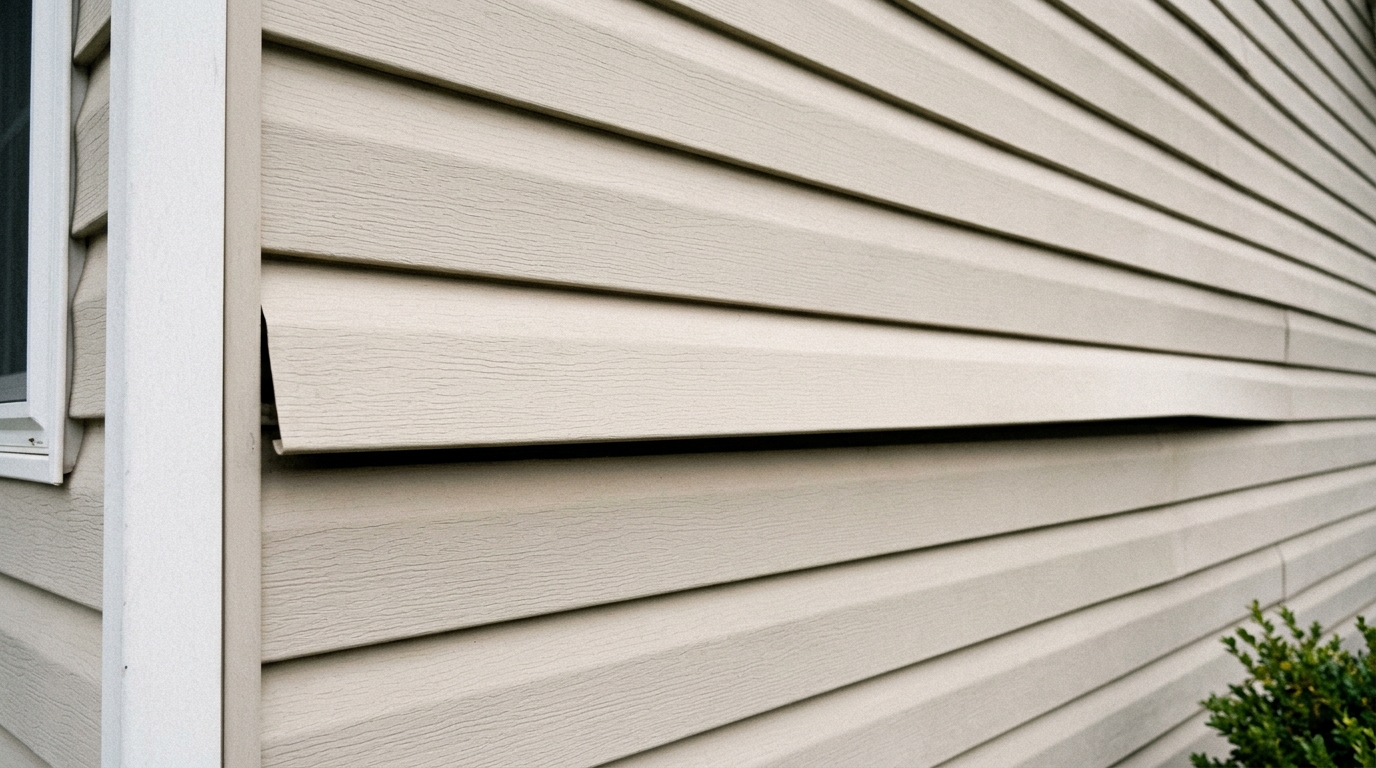
A strip of vinyl siding that bows away from the wall after a windy day may have simply come unhooked from the strip below it. If the interlocking edges are intact and you can reach the section safely from the ground, a siding zip tool can often reconnect the seam without replacing the panel.
This guide covers a loose horizontal vinyl siding seam, not cracked panels, detached trim, or a damaged wall behind the siding. Allow about 20–45 minutes for an accessible section; longer panels and damaged parts can take more time. A zip tool typically costs $5–$15. Work slowly: brittle vinyl can crack, particularly in cold weather.
Check what came loose
Look at the bottom edge of the displaced panel. Horizontal vinyl siding has a shaped lower lip that locks onto the upper edge of the course below. When that lock separates, the lower edge can lift outward while the panel remains attached at the top.
Before buying a tool, check these conditions:
- The lip is intact: A continuous, undamaged edge is a candidate for reconnection. A torn or missing lock usually means the panel needs replacement.
- The panel lies reasonably flat: Severe buckling, distorted siding, or repeated separation can point to installation or movement problems that snapping the seam shut will not solve.
- The wall behind it looks sound: Soft sheathing, visible rot, loose flashing, or signs of water intrusion need investigation before covering them again.
- The work is safely reachable: This is a ground-level repair. Hire a contractor for high sections or areas above uneven ground.
If the siding is unusually brittle, has been heated out of shape, or is broken across its face, stop rather than force it. Matching older siding may require a replacement section sourced by a contractor.
Gather the right supplies
You need a vinyl siding removal tool, commonly called a zip tool, a soft cloth, and work gloves. A small brush can clear loose dirt from the seam. Eye protection is sensible when working underneath the edge. A zip tool has a curved hook designed to catch the siding’s locking lip; a screwdriver can gouge or crack the vinyl.
Choose a mild day when the panel is flexible. Avoid forcing cold, stiff vinyl, and never use a torch or heat gun to make it bend. Do not work during high winds, rain, or lightning.
Reconnect the seam
- Clear the joint. Brush dirt and leaves from the loose edges. Check for damage and remove anything that prevents the two profiles from meeting. Don’t cut or pull at the housewrap behind the siding.
- Position the panel. Gently bring the loose lower edge toward the top edge of the panel beneath it. If only part of the seam has separated, start near the section that is still connected.
- Hook the lower lip. Slip the curved end of the zip tool under the loose panel’s bottom lip. Catch the lip itself, not the weather barrier or the panel underneath.
- Pull down and press in. Draw the lip downward just enough to clear the lock on the lower panel, then push the siding toward the wall so the edges engage. Slide the tool along a short section while maintaining gentle downward tension, pressing the seam together behind it.
- Check the entire repair. Remove the tool and run a gloved hand along the seam. The edge should sit consistently against the course below. Gently tug outward at several points; it should remain engaged without a visible gap. Stop if a section will not catch rather than forcing it.
The zip tool may be easier to use from one end of the loose area than the other. If the lip won’t reach, inspect for a bent lock or a panel that is constrained elsewhere. Do not pull hard enough to crease the vinyl.
Avoid the fixes that cause more damage
Don’t drive a nail through the face to hold the panel down. Vinyl siding expands and contracts with temperature. Face-fastening can restrict movement and cause buckling; it can also puncture the weather-resistive layers behind the siding.
Don’t seal the seam shut with caulk. The siding assembly needs to move and drain as designed. A bead over the joint can conceal a broken lock without solving the cause.
Don’t assume siding alone waterproofs the wall. Siding sheds much of the rain, but the water-resistive barrier and properly integrated flashing behind it are essential. If these layers are torn, missing, or visibly damaged, have them assessed before the wall is closed up.
After the next windy day, inspect the seam again from the ground. If it opens repeatedly, the lock may be worn, the panel may be distorted, or the installation may need adjustment. Repeatedly snapping it back is not a durable repair.
When to call a siding contractor
Call a professional if the lip is cracked or missing, several courses have come loose, the panel won’t stay locked, or the siding is buckled. Also call if you see damaged flashing, wet or soft sheathing, or deterioration behind the siding. A contractor can identify the cause, replace damaged material, and assess the underlying wall.
For siding above ground-level reach, leave the ladder work to an insured professional. A small seam repair is not worth a fall.