
Signs a Small Water Leak Is Turning Into Wall Damage
Learn the warning signs that a small plumbing, caulk, or window leak is already damaging walls so you can fix the source before patching.
The short answer
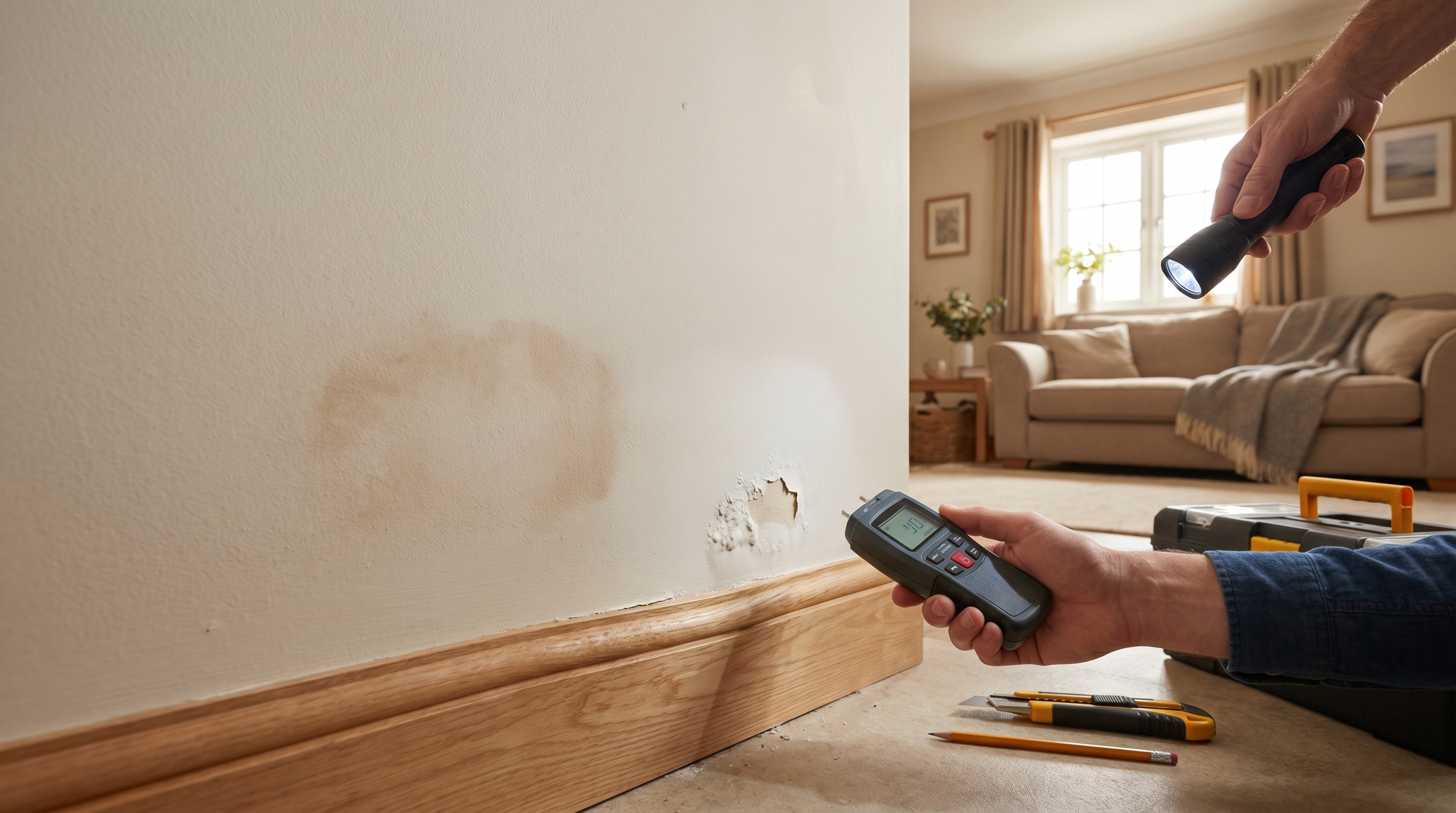
Yes, a small leak can absolutely turn into wall damage. Early warning signs include bubbling paint, soft drywall, yellow or brown staining, peeling caulk, musty odor, swollen trim, and repairs that keep failing in the same area.
Why small leaks become expensive fast
Most wall-damage problems do not start as dramatic floods. They start as slow, repeated moisture from a window gap, a bad caulk joint, a small plumbing drip, or exterior trim failure. Because the leak is gradual, homeowners often notice the surface damage only after the wall has already been wet for a while.
That is why catching the pattern matters more than waiting for obvious collapse.
Common signs a small leak is already affecting the wall
1. Paint or drywall texture starts bubbling
Moisture breaks the bond between the finish surface and the wall underneath. If paint or texture is lifting, especially near bathrooms, windows, or plumbing walls, water should be on your suspect list.
2. Yellow, tan, or brown staining appears
Water stains often show up as discolored rings or irregular blotches. Even if the spot dries out, the stain usually means moisture passed through that area.
3. The wall feels soft, crumbly, or swollen
Drywall should not feel spongy. Softness, swelling, or a papery surface that breaks down easily usually means the material has been wet long enough to weaken.
4. Caulk keeps peeling or separating
If you re-caulk a shower edge or window trim and the joint fails again quickly, the issue may be ongoing moisture movement, not bad luck with the product.
5. There is a musty smell with no obvious source
A persistent musty odor near one wall, vanity, tub apron, or window can mean moisture is trapped where airflow is limited.
6. Baseboards or trim start swelling or pulling away
Wood trim often telegraphs moisture before drywall damage becomes dramatic. Swelling, paint cracking, or miter joints opening up can all point to repeated wetting.
7. The same patch or paint repair keeps failing
If a crack, stain, or soft area keeps returning, the surface repair is probably not addressing the real leak.
Where these leaks commonly come from
Small wall-damage leaks often trace back to:
- failed tub or shower caulk
- loose plumbing connections under sinks or behind toilets
- drafty or poorly sealed windows
- cracked exterior trim or failed exterior caulk
- roof or flashing leaks near exterior walls
The source is not always directly above the visible damage, so follow the evidence carefully.
What to do before you patch anything
- Stop using the fixture or area if needed. This matters most around showers, tubs, and supply leaks.
- Find the most likely source. Check plumbing, caulk lines, window seals, and exterior trim.
- Dry the area and monitor it. A moisture meter helps, but even careful observation over a few days is useful.
- Repair the source first. Do not patch drywall until the moisture problem is solved.
- Then evaluate whether the wall is still sound. Stained drywall is not always ruined, but soft drywall often is.
When the damage is still DIY-friendly
DIY may still make sense when:
- the moisture source is obvious and minor
- the damaged area is small and fully dried
- the drywall is stained but not soft or moldy
- the fix involves re-caulking, resealing, or a small wall patch
When to slow down and call a pro
Get professional help sooner if:
- the wall is mushy, sagging, or crumbling
- moisture keeps returning and you cannot identify the source
- you see mold growth or smell strong persistent mustiness
- the leak may be inside plumbing or roof assemblies
- the affected area is large or near electrical components
Related repair pages
- How to Fix Peeling Caulk Around a Bathtub or Shower
- How to Reseal Drafty Windows Without Replacing Them
- How to Patch Drywall Holes the Right Way
- Drywall Repair Cost Estimator
- DIY Wall Repair Mistakes That Make Paint Touch-Ups Obvious
Frequently asked questions
What are the first signs of water damage in a wall?
Early signs often include bubbling paint, staining, soft drywall, musty smell, swollen trim, or caulk that keeps failing.
Can a small leak damage drywall?
Yes. Repeated minor moisture can soften drywall, stain paint, weaken trim, and create mold risk over time.
How do I know if a leak is behind a wall?
Look for recurring stains, soft spots, odor, bubbling finishes, or damage near plumbing fixtures, windows, or exterior joints.
Should I patch water-damaged drywall right away?
No. Fix the leak source and confirm the area is dry and stable first. Otherwise the repair may fail again.
When is wall moisture a mold risk?
Risk goes up when moisture persists, airflow is poor, and materials stay damp long enough for odor, discoloration, or visible growth to appear.