
Joint Compound vs Spackle vs Patch Kits: What to Use and When
Explains when to use joint compound, spackle, or a drywall patch kit so small repairs look better and larger holes do not fail.
The short version
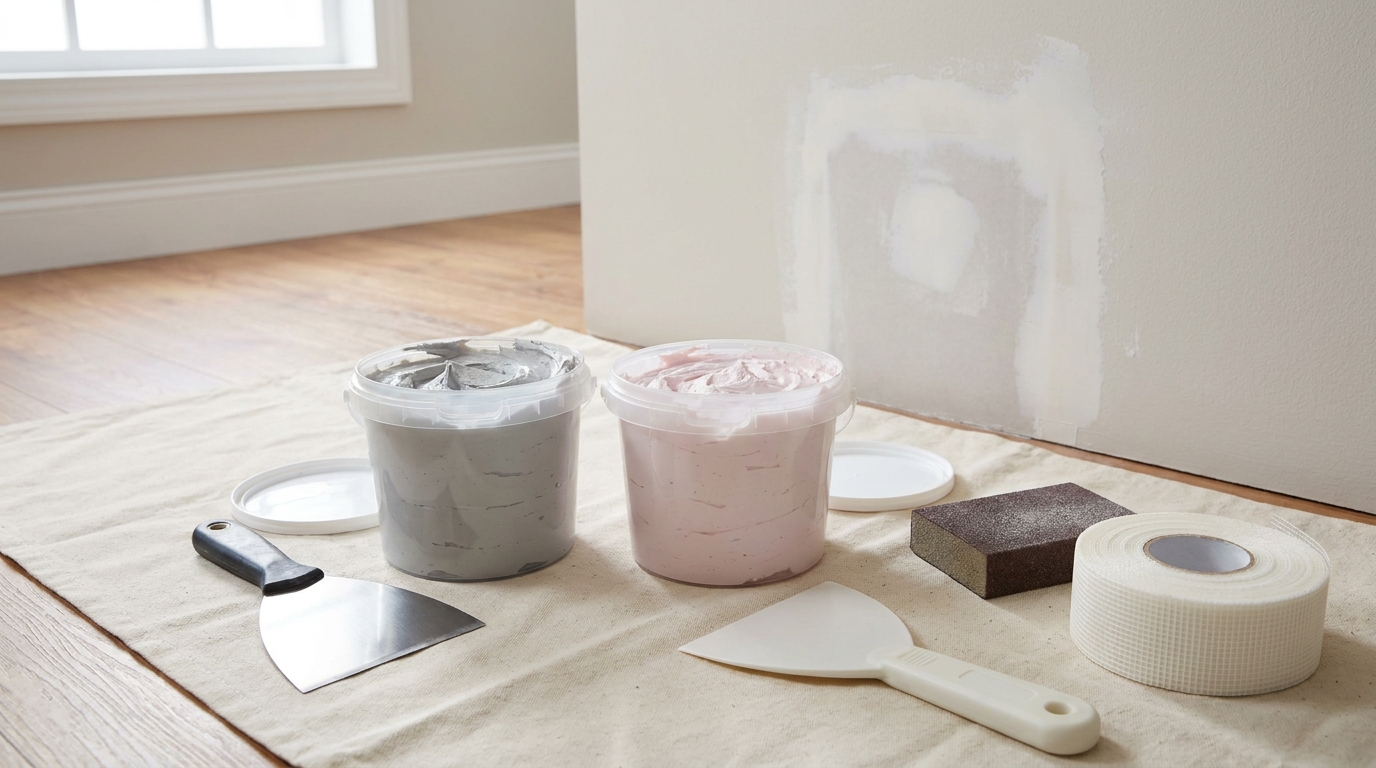
If the damage is tiny, use spackle. If the repair needs multiple coats, feathering, or taping, use joint compound. If the hole is too large for filler alone, use a patch kit or a cut-in drywall patch.
That sounds simple, but many ugly repairs happen because homeowners pick the wrong material first.
When spackle makes sense
Spackle is best for:
- nail holes
- pin holes
- tiny dents
- very shallow wall blemishes
It is convenient because it dries relatively fast and is easy for quick cosmetic touch-ups. The problem is that people often keep using it long after the hole size says they should switch products.
When joint compound is the better choice
Joint compound is better for:
- wider skim coats
- feathering over patches
- taping seams
- medium-size drywall repairs
- blending a repair into the surrounding wall
If you want the repair to disappear better after paint, compound usually gives you more workable finish control than spackle.
All-purpose compound vs setting-type compound
All-purpose compound is the easy default for many homeowners because it is forgiving and versatile.
Setting-type compound is better when you want faster recoats or a stronger fill layer, but it takes a bit more care because it hardens chemically and does not wait around for you.
When a patch kit is necessary
A patch kit becomes useful when the opening is too large or too weak around the edges for filler alone to stay stable. The kit gives the repair some structure so your compound is not just spanning open air.
Patch kits are commonly useful for:
- doorknob holes
- torn-out anchor damage
- medium wall openings
- drywall paper damage that needs reinforcement
A practical way to choose
Use spackle if
- the hole is tiny
- you are doing a cosmetic touch-up
- you do not need tape or a patch
Use joint compound if
- you are building and feathering multiple coats
- the repair needs to blend wider into the wall
- you are finishing over tape or a mesh patch
Use a patch kit if
- the hole is too large for filler alone
- the drywall face is broken enough to need support
- you want a simple beginner-friendly structure for the repair
Common mistakes that make drywall repairs look worse
Using spackle for everything
Spackle is handy, but it is not the answer for every hole.
Using compound with no patch support
If the opening needs structure, compound alone can crack, sag, or sink.
Skipping primer because the patch feels smooth
Even a smooth patch often flashes through paint without primer.
Confusing quick drying with better results
A faster product is not automatically the best one. Choose based on hole size and finish needs.
Best approach for most homeowners
For a typical DIY toolkit, it makes sense to keep:
- a small container of lightweight spackle
- all-purpose joint compound
- one or two mesh patches or a basic patch kit
That covers most everyday wall damage without overcomplicating the job.
Related pages to help you finish the repair
- How to Patch Drywall Holes the Right Way
- Best Drywall Patch Kits for Small and Medium Wall Repairs
- Drywall Repair Cost Estimator
- DIY Wall Repair Mistakes That Make Paint Touch-Ups Obvious
Frequently asked questions
Should I use spackle or joint compound for drywall repair?
Use spackle for tiny cosmetic holes. Use joint compound for wider repairs, feathering, taping, and better blending.
Are drywall patch kits better than compound alone?
For many small and medium holes, yes. Patch kits add support that compound alone cannot provide.
What is the difference between spackle and joint compound?
Spackle is usually better for tiny fast repairs. Joint compound is more versatile for larger finish work and seam treatment.
Can I use joint compound on a small nail hole?
Yes, but many homeowners prefer spackle because it is quicker and simpler for very small damage.
When should I use a drywall patch kit instead of filler?
Use a patch kit when the opening is too large, torn, or weak for filler alone to stay stable and look clean.
| Product | Best for | Price band | Why it stands out |
|---|---|---|---|
| Lightweight Spackle | Tiny nail holes, pin holes, and shallow dings | $ | Fast and simple for very small cosmetic fixes, but not ideal for larger repairs |
| All-Purpose Joint Compound | Feathering, taping, and most medium drywall repairs | $ | More versatile and better for wider finish work, though drying time is longer |
| Setting-Type Compound | Faster build-up coats and stronger patch support | $$ | Great when you need a stronger repair or quicker turnaround between coats |
| Drywall Patch Kit | Small to medium holes that need structure behind the finish | $$ | Useful when filler alone is not enough and you want a simple patch system |